Manifesto of sentimentialism
It is a return to what matters
Manifesto of sentimentialism
It is a return to what matters
Preamble
I did not create Sentimentialism to add yet another label to the overflowing catalog of artistic trends. Sentimentialism is not a strategy, a posture, or a school of thought. It is a breath, an inner necessity, a living response to the way art is practiced today, too verbose, too clever, too heavy with intention.
The world moves fast and art follows. We over-explain, we over-intellectualize, we shroud every gesture in theory. But I seek what precedes words: that silent shiver sparked by an image stripped bare, speaking without the need for translation, what cannot be said, yet must be felt.
Sentimentialism rejects spectacle, flash, and ironic detachment. It does not aim to please or to provoke. Its purpose is to touch, to stir, and to awaken what is most human, most raw, and most vulnerable within us.
It is a return to what matters. Painting without masks, without performance, without the desire to impress. Not an aesthetic of emotion, but emotion made visible.
This manifesto is an invitation: not to understand, but to feel; not to interpret, but to be moved. It speaks to those who still believe art can be a place of truth. A truth that does not shout, but whispers gently.
Preamble
I did not create Sentimentialism to add yet another label to the overflowing catalog of artistic trends. Sentimentialism is not a strategy, a posture, or a school of thought. It is a breath, an inner necessity, a living response to the way art is practiced today, too verbose, too clever, too heavy with intention.
The world moves fast and art follows. We over-explain, we over-intellectualize, we shroud every gesture in theory. But I seek what precedes words: that silent shiver sparked by an image stripped bare, speaking without the need for translation, what cannot be said, yet must be felt.
Sentimentialism rejects spectacle, flash, and ironic detachment. It does not aim to please or to provoke. Its purpose is to touch, to stir, and to awaken what is most human, most raw, and most vulnerable within us.
It is a return to what matters. Painting without masks, without performance, without the desire to impress. Not an aesthetic of emotion, but emotion made visible.
This manifesto is an invitation: not to understand, but to feel; not to interpret, but to be moved. It speaks to those who still believe art can be a place of truth. A truth that does not shout, but whispers gently.
Manifesto of sentimentialism
1. Emotion
Sentimentialism puts emotion at the center of the artistic experience.
A work of art is not a message to decode, but a sensation to receive.
It doesn’t speak to your intellect, it speaks to your perception..
2. Against Emptiness
In a time flooded with hollow concepts, showy effects, and noise without silence,
Sentimentialism chooses another path, the path of the sensitive.
Sentimentialism rejects shallow overstatement, pretentious theory, and art-as-slogan.
SDentimentialism returns to the raw gesture, the unfiltered emotion, the inhabited gaze.
3. Resistance
Sentimentialism resists spectacle.
Sentimentialism does not aim to please or to provoke.
Sentimentialism has nothing to prove.
Sentimentialism chooses a true emotion over a thousand polite claps.
4. Simplicity
No visual chatter, no decorative skill.
The gesture is bare, sincere.
Form is stripped down so as not to cloud the emotional truth.
What remains: silence, echo, vibration.
5. Presence
A Sentimentialist painting is, above all, a meeting.
It exists in the moment of being seen.
It changes as you change.
It is not a product, it’s a presence.
6. Freedom
There is no “correct” interpretation.
No frame of reference is imposed.
Every viewer makes the work their own.
You are not a spectator, you are a co-creator.
7. Universality
Sentimentialism knows no borders cultural, social, or linguistic.
It speaks to anyone who feels.
No matter their age, language, background, or story.
8. No narration
Titles do not explain, they mislead, they shift perception.
Sentimentialism refuses to speak on your behalf.
Sentimentialism invites you to feel, with no manual, no storyline.
9. Instinctive Technique
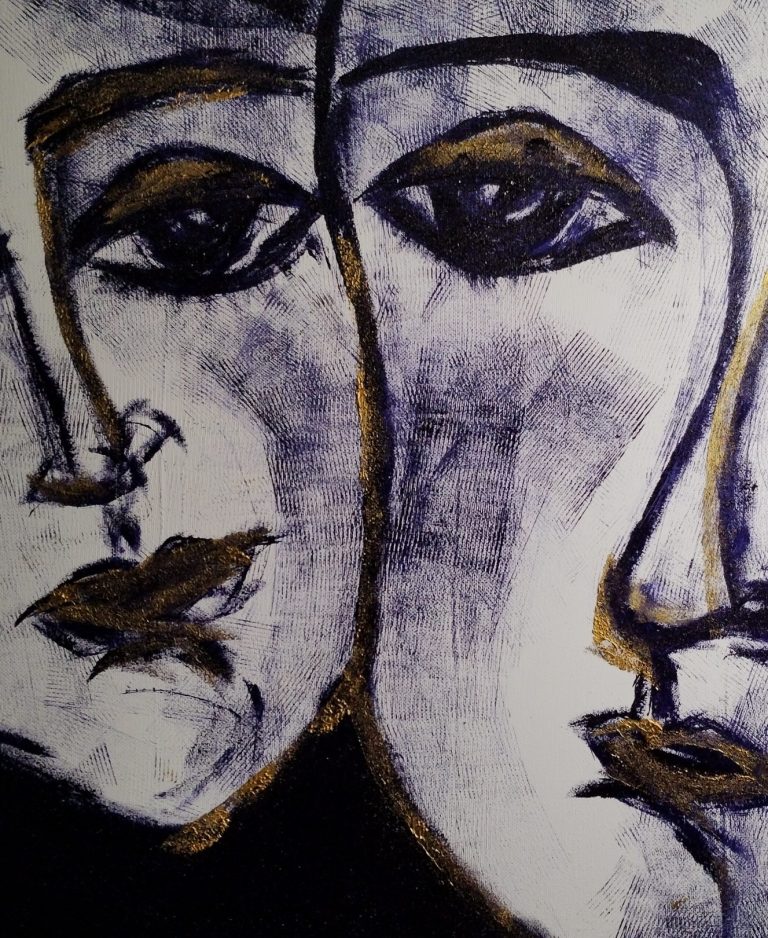
No brushes, no knives only rollers.
A mechanical gesture turned organic.
Only two colors: Prussian blue and gold. Sobriety and intensity.
No retouching, no erasing, imperfection is truth.
Every mark is final, alive, flawed, human.
10. Tight Framing
Each canvas is framed like held breath.
No escape, no off-screen.
What you see is all there is and that is enough.
The frame creates presence, it denies distraction.
11. Commitment
Sentimentialism is a soft form of resistance,
a rebellion made of sensitivity.
Sentimentialism is not a school, It is a quiet conspiracy.
Join us, or watch it begin.
Manifesto of Sentimentialism
1. Emotion
Sentimentialism puts emotion at the center of the artistic experience.
A work of art is not a message to decode, but a sensation to receive.
It doesn’t speak to your intellect, it speaks to your perception..
2. Against Emptiness
In a time flooded with hollow concepts, showy effects, and noise without silence,
Sentimentialism chooses another path, the path of the sensitive.
Sentimentialism rejects shallow overstatement, pretentious theory, and art as slogan.
Sentimentialism returns to the raw gesture, the unfiltered emotion, the inhabited gaze.
3. Resistance
Sentimentialism resists spectacle.
Sentimentialism does not aim to please or to provoke.
Sentimentialism has nothing to prove.
Sentimentialism chooses a true emotion over a thousand polite claps.
4. Simplicity
No visual chatter, no decorative skill.
The gesture is bare, sincere.
Form is stripped down so as not to cloud the emotional truth.
What remains: silence, echo, vibration.
5. Presence
A Sentimentialist painting is, above all, a meeting.
It exists in the moment of being seen.
It changes as you change.
It is not a product, it’s a presence.
6. Freedom
There is no “correct” interpretation.
No frame of reference is imposed.
Every viewer makes the work their own.
You are not a spectator, you are a co-creator.
7. Universality
Sentimentialism knows no cultural, social, or linguistic borders.
It speaks to the core of those who feel, beyond age, language, or origin.
It is not a bridge, it is the ground we already stand on.
8. No narration
Titles do not explain, they mislead, they shift perception.
Sentimentialism refuses to speak on your behalf.
Sentimentialism invites you to feel, with no manual, no storyline.
9. Instinctive Technique
No brushes, no knives only rollers.
A mechanical gesture turned organic.
Only two colors: Prussian blue and gold. Sobriety and intensity.
No retouching, no erasing, imperfection is truth.
Every mark is final, alive, flawed, human.
10. Tight Framing
Each canvas is framed like held breath.
No escape, no off-screen.
What you see is all there is and that is enough.
The frame creates presence, it denies distraction.
11. Commitment
Sentimentialism is a soft form of resistance,
a rebellion made of sensitivity.
Sentimentialism is not a school, it is a quiet conspiracy.
Join us, or watch it begin.