The Sentimentialist
Art Movement
Origins and Philosophy
Sentimentialism art movement is born from the roller
Sentimentialism
" The Roller’s Mark "
"Born from the roller, Sentimentialism rejects the artifice of the brush. It is a quest for the absolute and a direct impact where the image is no longer described but lived."
Henry Brislak

Henry Brislak
founder of Sentimentialism
The Sentimentialist
Art Movement
Origins and Philosophy
Sentimentialism art movement
is born from the roller
The Sentimentialist Art Movement
Origins and Philosophy
Sentimentialism art movement is born from the roller
Henry Brislak
fundador del Sentimentialismo
Henry Brislak
founder of Sentimentialism
Sentimentialism
" The Roller’s Mark "
“Born from the roller, Sentimentialism rejects the artifice of the brush. It is a quest for the absolute and a direct impact where the image is no longer described but lived.”
Henry Brislak
The
origins
of
Sentimentialism
By
Henry Brislak
Sentimentialism is an art movement founded by Henry Brislak. Art world is choking on its own discourse. In the frantic race for ‘concepts’ and intellectual validation, the essential has been discarded: the raw, visceral impact of a shiver.
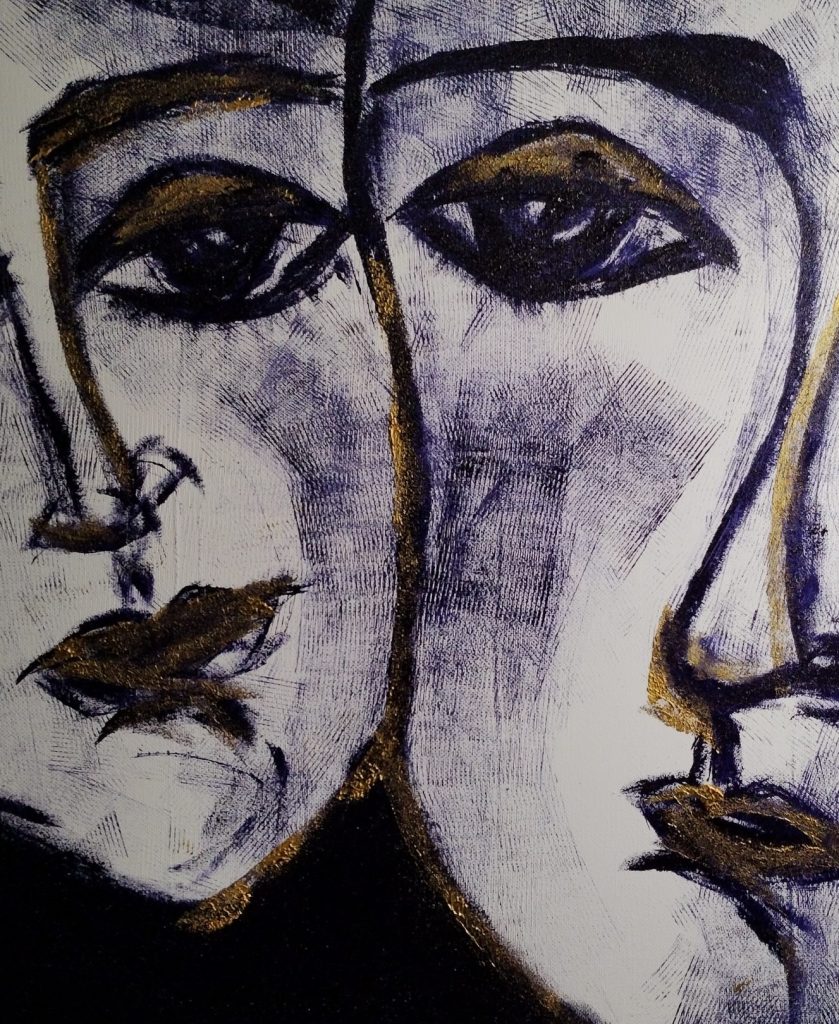
Sentimentialism is not an evolution; it is a cut. It is a refusal to play the part or to hide behind theoretical smoke and mirrors. Henry Brislak uses the roller to flatten the ego and strip the canvas bare. No academic flourishes, no technological gimmicks. Only the depth of Prussian blue and the spark of gold to face what contemporary society fears most: the silence of an unfiltered emotion.
It is also a refusal of art as performance or provocation. Sentimentialism does not aim to shock or to explain. It opens a dialogue, where the viewer’s gaze becomes a creative act in itself.
The
origins
of
Sentimentialism
By
Henry Brislak
Sentimentialism is an art movement founded by Henry Brislak. Art world is choking on its own discourse. In the frantic race for ‘concepts’ and intellectual validation, the essential has been discarded: the raw, visceral impact of a shiver.
Sentimentialism is not an evolution; it is a cut. It is a refusal to play the part or to hide behind theoretical smoke and mirrors. Henry Brislak uses the roller to flatten the ego and strip the canvas bare. No academic flourishes, no technological gimmicks. Only the depth of Prussian blue and the spark of gold to face what contemporary society fears most: the silence of an unfiltered emotion.
The
origins
of
Sentimentialism
By
Henry Brislak
Sentimentialism is an art movement founded by Henry Brislak. Art world is choking on its own discourse. In the frantic race for ‘concepts’ and intellectual validation, the essential has been discarded: the raw, visceral impact of a shiver.
Sentimentialism is not an evolution; it is a cut. It is a refusal to play the part or to hide behind theoretical smoke and mirrors. Henry Brislak uses the roller to flatten the ego and strip the canvas bare. No academic flourishes, no technological gimmicks. Only the depth of Prussian blue and the spark of gold to face what contemporary society fears most: the silence of an unfiltered emotion.
The viewer
as
co-creator
In Sentimentialism, a painting is never a finished statement. It is a silence that refuses to impose a truth. Through the raw simplicity of the roller and a deliberate absence of narrative, Henry Brislak creates a rift, a fertile void that demands to be filled.
To look at these canvases is not to observe, but to project. What you see is not the artist’s intent, but your own capacity to feel at that exact moment. Your memories, your wounds, and your own sense of vertigo are the final pigments. This is a mirror without a reflection, where individual emotion completes the initial movement of the roller.
The viewer does not just see the work; they construct it. You do not add a form, you forge its meaning. The painting exists fully only in this silent confrontation, where the work is born again through the power of your gaze.
The viewer as co-creator
In Sentimentialism, a painting is never a finished statement. It is a silence that refuses to impose a truth. Through the raw simplicity of the roller and a deliberate absence of narrative, Henry Brislak creates a rift, a fertile void that demands to be filled.
To look at these canvases is not to observe, but to project. What you see is not the artist’s intent, but your own capacity to feel at that exact moment. Your memories, your wounds, and your own sense of vertigo are the final pigments. This is a mirror without a reflection, where individual emotion completes the initial movement of the roller.
The viewer does not just see the work; they construct it. You do not add a form, you forge its meaning. The painting exists fully only in this silent confrontation, where the work is born again through the power of your gaze.
The viewer as co-creator
where the gaze constructs
In Sentimentialism, a painting is never a finished statement. It is a silence that refuses to impose a truth. Through the raw simplicity of the roller and a deliberate absence of narrative, Henry Brislak creates a rift, a fertile void that demands to be filled.
To look at these canvases is not to observe, but to project. What you see is not the artist’s intent, but your own capacity to feel at that exact moment. Your memories, your wounds, and your own sense of vertigo are the final pigments. This is a mirror without a reflection, where individual emotion completes the initial movement of the roller.
The viewer does not just see the work; they construct it. You do not add a form, you forge its meaning. The painting exists fully only in this silent confrontation, where the work is born again through the power of your gaze.
The symbolism of prussian blue and gold
as a deliberate choice
The choice of Prussian Blue and Gold defines the space of Sentimentialism. It is more than a palette; it is an anchor. Prussian Blue offers a depth that never ends; it invites the gaze to wander in order to truly find itself. It is the silence necessary for a genuine feeling to emerge.
Beside it, Gold is not there to decorate. It is that glow of life, the shiver that pierces the darkness. It is the trace of human presence, a light that persists. By focusing on these two forces, Henry Brislak seeks the essential: where color stops being an image and starts being pure emotion.
Prussian Blue absorbs the silence, the weight, the depth of what cannot be said.
Gold appears sparingly, not to decorate, but to insist on presence.
The symbolism of prussian blue and gold
as a deliberate choice
The choice of Prussian Blue and Gold defines the space of Sentimentialism. It is more than a palette; it is an anchor. Prussian Blue offers a depth that never ends; it invites the gaze to wander in order to truly find itself. It is the silence necessary for a genuine feeling to emerge.
Beside it, Gold is not there to decorate. It is that glow of life, the shiver that pierces the darkness. It is the trace of human presence, a light that persists. By focusing on these two forces, Henry Brislak seeks the essential: where color stops being an image and starts being pure emotion.
Prussian Blue absorbs the silence, the weight, the depth of what cannot be said.
Gold appears sparingly, not to decorate, but to insist on presence.
The symbolism of prussian blue and gold
as a deliberate choice
The choice of Prussian Blue and Gold defines the space of Sentimentialism. It is more than a palette; it is an anchor. Prussian Blue offers a depth that never ends; it invites the gaze to wander in order to truly find itself. It is the silence necessary for a genuine feeling to emerge.
Beside it, Gold is not there to decorate. It is that glow of life, the shiver that pierces the darkness. It is the trace of human presence, a light that persists. By focusing on these two forces, Henry Brislak seeks the essential: where color stops being an image and starts being pure emotion.
Prussian Blue absorbs the silence, the weight, the depth of what cannot be said.
Gold appears sparingly, not to decorate, but to insist on presence.
The paint roller technique, an emotional impression
Using a paint roller instead of a brush is not merely a technical choice; it is a radical stance. For Henry Brislak, the roller symbolizes a break from tradition, a rejection of the refined gestures and academic flourishes that often dominate the art world. Unlike the brush, the roller allows no room for artifice. It flattens, it spreads, it simplifies. In doing so, it liberates.
Brislak turns to the roller for its raw honesty. It strips the act of painting down to its core: movement, instinct, and presence. There is no space for ego, only for the emotion to breathe directly on the surface. The tool becomes an extension of the body, translating an inner state into a gesture both forceful and vulnerable. This is the essence of Sentimentialism: a commitment to sincerity and to an emotional truth that dares to be simple yet deeply human.
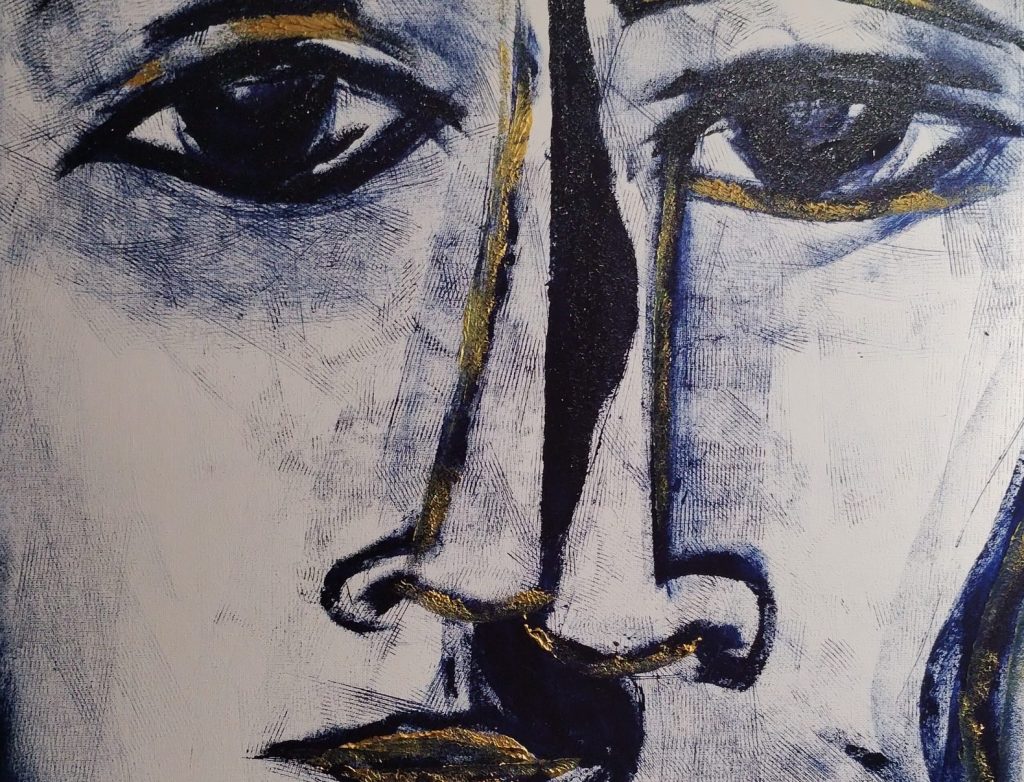
The roller forces honesty.
The paint roller technique,
an emotional impression
Using a paint roller instead of a brush is not merely a technical choice; it is a radical stance. For Henry Brislak, the roller symbolizes a break from tradition, a rejection of the refined gestures and academic flourishes that often dominate the art world. Unlike the brush, the roller allows no room for artifice. It flattens, it spreads, it simplifies. In doing so, it liberates.
Brislak turns to the roller for its raw honesty. It strips the act of painting down to its core: movement, instinct, and presence. There is no space for ego, only for the emotion to breathe directly on the surface. The tool becomes an extension of the body, translating an inner state into a gesture both forceful and vulnerable. This is the essence of Sentimentialism: a commitment to sincerity and to an emotional truth that dares to be simple yet deeply human.
The paint roller technique,
for an emotional impression
Using a paint roller instead of a brush is not merely a technical choice; it is a radical stance. For Henry Brislak, the roller symbolizes a break from tradition, a rejection of the refined gestures and academic flourishes that often dominate the art world. Unlike the brush, the roller allows no room for artifice. It flattens, it spreads, it simplifies. In doing so, it liberates.
Brislak turns to the roller for its raw honesty. It strips the act of painting down to its core: movement, instinct, and presence. There is no space for ego, only for the emotion to breathe directly on the surface. The tool becomes an extension of the body, translating an inner state into a gesture both forceful and vulnerable. This is the essence of Sentimentialism: a commitment to sincerity and to an emotional truth that dares to be simple yet deeply human.
Sentimentialism across borders and its
universal
resonance
In China, Sentimentialism has taken root under the name 情原主义 (qíngyuán zhǔyì), a term that speaks of emotional essence and authentic origin. Far from being a Western concept projected onto the world, Sentimentialism resonates with deeply human values that transcend geography. Its focus on simplicity, emotional depth and freedom of interpretation opens a space where every culture can find its own reflection.
What Henry Brislak proposes through Sentimentialism is not a style but a shared emotional language. It does not rely on words or context but on presence and sincerity. Whether in Paris, Hong Kong or Santiago, the work does not need translation, it invites feeling. It connects. In a fragmented world, Sentimentialism becomes a quiet act of unity, a reminder that before we define or categorize, we all feel something, whatever our origins.
Sentimentialism across borders and its
universal
resonance
In China, Sentimentialism has taken root under the name 情原主义 (qíngyuán zhǔyì), a term that speaks of emotional essence and authentic origin. Far from being a Western concept projected onto the world, Sentimentialism resonates with deeply human values that transcend geography. Its focus on simplicity, emotional depth and freedom of interpretation opens a space where every culture can find its own reflection.
What Henry Brislak proposes through Sentimentialism is not a style but a shared emotional language. It does not rely on words or context but on presence and sincerity. Whether in Paris, Hong Kong or Santiago, the work does not need translation, it invites feeling. It connects. In a fragmented world, Sentimentialism becomes a quiet act of unity, a reminder that before we define or categorize, we all feel something, whatever our origins.
Sentimentialism speaks where language ends.
It belongs to no territory, only to shared emotion.
Across cultures, it remains a common ground.
Sentimentialism and Contemporary Society
In today’s hyper-connected world, we are constantly stimulated, yet rarely touched. Information travels faster than reflection, and images flash by without leaving a trace. In this context, Sentimentialism positions itself not as a rejection of modernity, but as a quiet resistance to its excesses.
It does not seek to oppose technology, but to reintroduce presence. It asks: what remains when we strip away noise, narrative, and spectacle? The answer is often disarming: a feeling, raw and unfiltered, that reminds us of our common humanity. In a society where identity is often fragmented and curated, Sentimentialism creates a space where nothing is performed, and everything is allowed to be felt. Its silence speaks louder than slogans. Its restraint becomes a radical gesture.
The movement doesn’t offer solutions. It doesn’t preach. It offers something more rare: a moment of sincerity. And in an age of performance, sincerity is perhaps the most subversive act of all.
Sentimentialism across borders and its
universal
resonance
In China, Sentimentialism has taken root under the name 情原主义 (qíngyuán zhǔyì), a term that speaks of emotional essence and authentic origin. Far from being a Western concept projected onto the world, Sentimentialism resonates with deeply human values that transcend geography. Its focus on simplicity, emotional depth and freedom of interpretation opens a space where every culture can find its own reflection.
What Henry Brislak proposes through Sentimentialism is not a style but a shared emotional language. It does not rely on words or context but on presence and sincerity. Whether in Paris, Hong Kong or Santiago, the work does not need translation, it invites feeling. It connects. In a fragmented world, Sentimentialism becomes a quiet act of unity, a reminder that before we define or categorize, we all feel something, whatever our origins.
Sentimentialism
and Contemporary Society
In today’s hyper-connected world, we are constantly stimulated, yet rarely touched. Information travels faster than reflection, and images flash by without leaving a trace. In this context, Sentimentialism positions itself not as a rejection of modernity, but as a quiet resistance to its excesses.
It does not seek to oppose technology, but to reintroduce presence. It asks: what remains when we strip away noise, narrative, and spectacle? The answer is often disarming: a feeling, raw and unfiltered, that reminds us of our common humanity. In a society where identity is often fragmented and curated, Sentimentialism creates a space where nothing is performed, and everything is allowed to be felt. Its silence speaks louder than slogans. Its restraint becomes a radical gesture.
The movement doesn’t offer solutions. It doesn’t preach. It offers something more rare: a moment of sincerity. And in an age of performance, sincerity is perhaps the most subversive act of all.
Sentimentialism
and
contemporary society
In today’s hyper-connected world, we are constantly stimulated, yet rarely touched. Information travels faster than reflection, and images flash by without leaving a trace. In this context, Sentimentialism positions itself not as a rejection of modernity, but as a quiet resistance to its excesses.
It does not seek to oppose technology, but to reintroduce presence. It asks: what remains when we strip away noise, narrative, and spectacle? The answer is often disarming: a feeling, raw and unfiltered, that reminds us of our common humanity. In a society where identity is often fragmented and curated, Sentimentialism creates a space where nothing is performed, and everything is allowed to be felt. Its silence speaks louder than slogans. Its restraint becomes a radical gesture.
The movement doesn’t offer solutions. It doesn’t preach. It offers something more rare: a moment of sincerity. And in an age of performance, sincerity is perhaps the most subversive act of all.