Henry BRISLAK
Sentimentialism
offers a visual silence in a world saturated with noise
Sentimentialism
" A unique artistic approach "
Henry Brislak, founder of Sentimentialism, transforms authenticity into timeless art.
Henry Brislak

Henry Brislak
founder of Sentimentialism
Henry Brislak Sentimentialism
offers a visual silence in a world saturated with noise
Sentimentialism
" A unique artistic approach "
Henry Brislak, founder of Sentimentialism, transforms authenticity into timeless art.
Henry Brislak
founder of Sentimentialism
founder of Sentimentialism
In a world saturated with noise
Henry BRISLAK
Sentimentialism
offers a visual silence in a world saturated with noise
Sentimentialism offers a visual silence that speaks to the soul.

Sentimentialism
" A unique artistic approach "
Henry Brislak, founder of Sentimentialism, transforms authenticity into timeless art.
Henry Brislak
founder of Sentimentialism
founder of Sentimentialism
Henry
Brislak,
a singular voice in contemporary art.
Founder of Sentimentialism, Henry Brislak (b. 1968) traces a path where the ego wavers and fades. Far from academic demonstration, his work is a quest for the essence — what remains when we finally relinquish control. It is an artistic perspective that seeks neither beauty nor artifice, but the echo of an authentic presence.
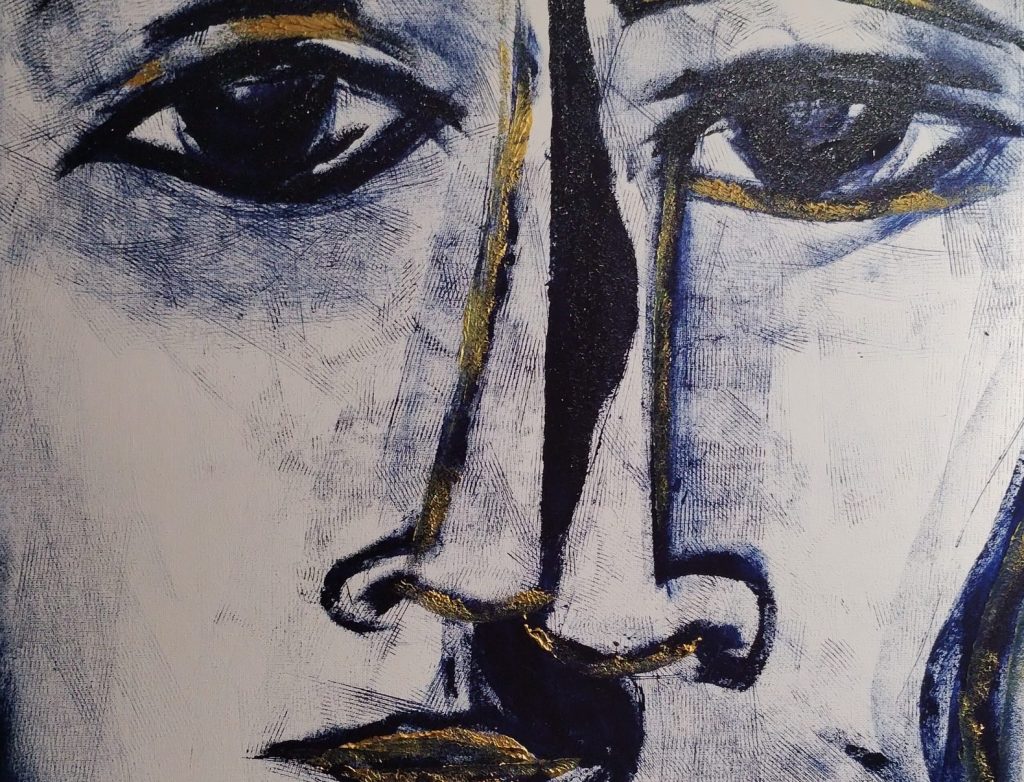
Henry Brislak is the pioneer of Emotional Figurative Abstraction. It is a style of painting where the face is no longer a portrait, but a vibration. Here, the form breathes, wavers, fades, and returns. Every trace from the roller is a breath, every imperfection a presence. Brislak does not describe: he reveals what trembles beneath the visible.
Henry Brislak,
a singular voice in contemporary art.
Founder of Sentimentialism, Henry Brislak (b. 1968) traces a path where the ego wavers and fades. Far from academic demonstration, his work is a quest for the essence , what remains when we finally relinquish control. It is an artistic perspective that seeks neither beauty nor artifice, but the echo of an authentic presence.
Henry Brislak is the pioneer of Emotional Figurative Abstraction. It is a style of painting where the face is no longer a portrait, but a vibration. Here, the form breathes, wavers, fades, and returns. Every trace from the roller is a breath, every imperfection a presence. Brislak does not describe: he reveals what trembles beneath the visible.
Henry Brislak, a singular voice in contemporary art.
Founder of the Sentimentialist movement, Henry Brislak (b. 1968) is the author of the seminal work Emotional Figurative Abstraction (2025). Through this manifesto, he theorized and established the foundations of a unique artistic current, marking contemporary art history with a codified approach to matter, Prussian Blue, and Gold. His work traces a path where the ego wavers and fades. Far from academic demonstration, it is a quest for the essence, what remains when we finally relinquish control. It is an artistic perspective that seeks neither beauty nor artifice.
Henry Brislak is the pioneer of Emotional Figurative Abstraction. It is a style of painting where the face is no longer a portrait, but a vibration. Here, the form breathes, wavers, fades, and returns. Every trace from the roller is a breath, every imperfection a presence. Brislak does not describe: he reveals what trembles beneath the visible.
Henry
Brislak
a path beyond
the beaten track
From an early age, Henry Brislak approached art not as a learned discipline, but as a visceral response to the world. He chose not to follow the well-trodden paths but instead carved his own, developing a visual language rooted in emotional truth.
He was captivated by the evocative power of shapes and colors, seeking a way to express emotions too complex for words and too subtle for structured frameworks. Over the years, this journey became one of exploration and quiet rebellion. He experimented widely, testing various techniques before deliberately stepping away from academic conventions.
Beyond brushes: the raw instinct of the roller
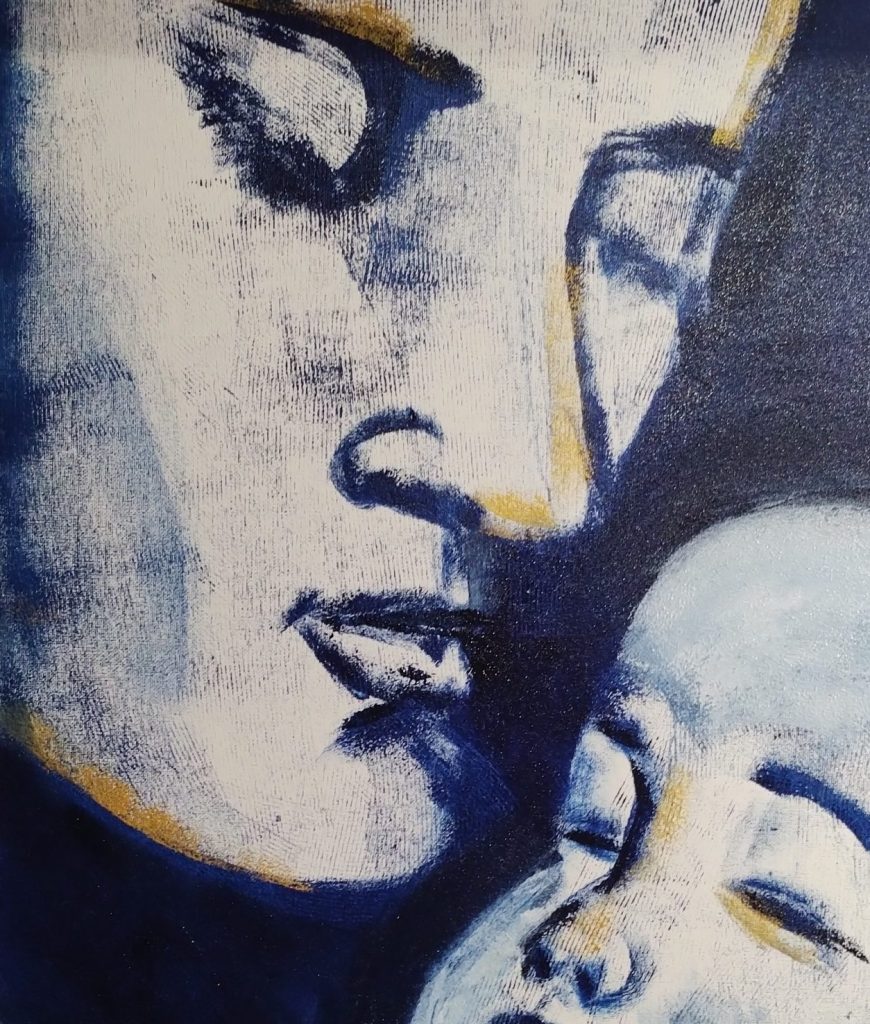
Brislak’s work stands apart in the landscape of contemporary art, not out of contrivance, but of necessity. His art is the product of a deeply personal trajectory that resists formulas and challenges dominant aesthetics. Rejecting the traditional tools of the painter’s studio, he uses no brushes, no palette knives. He works exclusively with paint rollers, raw and instinctive instruments that echo the immediacy of his gesture.
His canvases are almost always monochrome, grounded in Prussian blue, a color he chose for its timeless depth. Delicate accents of gold break the surface like fragments of memory—flashes of presence. The framing is deliberately tight, forcing a proximity that invites emotional engagement and leaves no room for detachment.
Emotional Figurative Abstraction: the breath of the face
Henry Brislak calls his work Emotional Figurative Abstraction. It is a way of painting that lies at the boundary between the abstract and the figurative. For him, the face is not a portrait, but an emotion that passes through us. It appears on the canvas like a breath, because Henry lets his gestures flow freely without ever trying to control them.
In this vision, the abstract and the figurative are no longer opposed: they are like the two stages of a breath. The movement goes from pure emotion seeking to reveal itself to a form that blends into this emotion. Through this bold restraint, Brislak invites the viewer not to analyze, but to feel.
A rare whisper in a world of noise
There is no imposed narrative; even the titles are intentionally misaligned so as not to color perception. In stepping away from galleries and institutional spaces, he has found freedom, a space to share without filter, to connect without hierarchy.
In a world saturated with noise, his work is a rare whisper of authenticity, inviting us to slow down, to observe, and perhaps, to see ourselves more clearly.
Henry Brislak, a path beyond
the beaten track
From an early age, Henry Brislak approached art not as a learned discipline, but as a visceral response to the world. He chose not to follow the well-trodden paths but instead carved his own, developing a visual language rooted in emotional truth.
He was captivated by the evocative power of shapes and colors, seeking a way to express emotions too complex for words and too subtle for structured frameworks. Over the years, this journey became one of exploration and quiet rebellion. He experimented widely, testing various techniques before deliberately stepping away from academic conventions.
Beyond brushes: the raw instinct of the roller
Brislak’s work stands apart in the landscape of contemporary art, not out of contrivance, but of necessity. His art is the product of a deeply personal trajectory that resists formulas and challenges dominant aesthetics. Rejecting the traditional tools of the painter’s studio, he uses no brushes, no palette knives. He works exclusively with paint rollers, raw and instinctive instruments that echo the immediacy of his gesture.
His canvases are almost always monochrome, grounded in Prussian blue, a color he chose for its timeless depth. Delicate accents of gold break the surface like fragments of memory—flashes of presence. The framing is deliberately tight, forcing a proximity that invites emotional engagement and leaves no room for detachment.
Emotional Figurative Abstraction: the breath of the face
Henry Brislak calls his work Emotional Figurative Abstraction. It is a way of painting that lies at the boundary between the abstract and the figurative. For him, the face is not a portrait, but an emotion that passes through us. It appears on the canvas like a breath, because Henry lets his gestures flow freely without ever trying to control them.
In this vision, the abstract and the figurative are no longer opposed: they are like the two stages of a breath. The movement goes from pure emotion seeking to reveal itself to a form that blends into this emotion. Through this bold restraint, Brislak invites the viewer not to analyze, but to feel.
A rare whisper in a world of noise
There is no imposed narrative; even the titles are intentionally misaligned so as not to color perception. In stepping away from galleries and institutional spaces, he has found freedom, a space to share without filter, to connect without hierarchy.
In a world saturated with noise, his work is a rare whisper of authenticity, inviting us to slow down, to observe, and perhaps, to see ourselves more clearly.
Henry
Brislak
invites
dialogue
Through this bold restraint, Brislak invites the viewer not to analyze, but to feel. His is an art of connection, silent, intimate, and undeniably human. His paintings are not about representation but sensation. There is no imposed narrative, no guiding hand; even the titles are intentionally misaligned, so as not to color perception.
For Brislak, the true power of art lies in what it evokes, not what it says. In stepping away from galleries and institutional spaces, he has found freedom: a space to share without filter, to connect without hierarchy.
In a world saturated with noise, his work is a rare whisper of authenticity, inviting us to slow down, to observe, and perhaps, to see ourselves more clearly.
Henry Brislak invites dialogue
Through this bold restraint, Brislak invites the viewer not to analyze, but to feel. His is an art of connection, silent, intimate, and undeniably human. His paintings are not about representation but sensation. There is no imposed narrative, no guiding hand; even the titles are intentionally misaligned, so as not to color perception.
For Brislak, the true power of art lies in what it evokes, not what it says. In stepping away from galleries and institutional spaces, he has found freedom: a space to share without filter, to connect without hierarchy.
In a world saturated with noise, his work is a rare whisper of authenticity, inviting us to slow down, to observe, and perhaps, to see ourselves more clearly.
Sentimentialism does not seek perfection or explanation.
It leaves space for what remains when control is released.
Henry Brislak invites dialogue
Through this bold restraint, Brislak invites the viewer not to analyze, but to feel. His is an art of connection, silent, intimate, and undeniably human. His paintings are not about representation but sensation. There is no imposed narrative, no guiding hand; even the titles are intentionally misaligned, so as not to color perception.
For Brislak, the true power of art lies in what it evokes, not what it says. In stepping away from galleries and institutional spaces, he has found freedom: a space to share without filter, to connect without hierarchy.
In a world saturated with noise, his work is a rare whisper of authenticity, inviting us to slow down, to observe, and perhaps, to see ourselves more clearly.
Sentimentialism does not seek perfection or explanation.
It leaves space for what remains when control is released.